"That's Not Fair!" Understanding the Justice Behavior Language
By Cheyenne Lofthouse-Wolf, LCSW
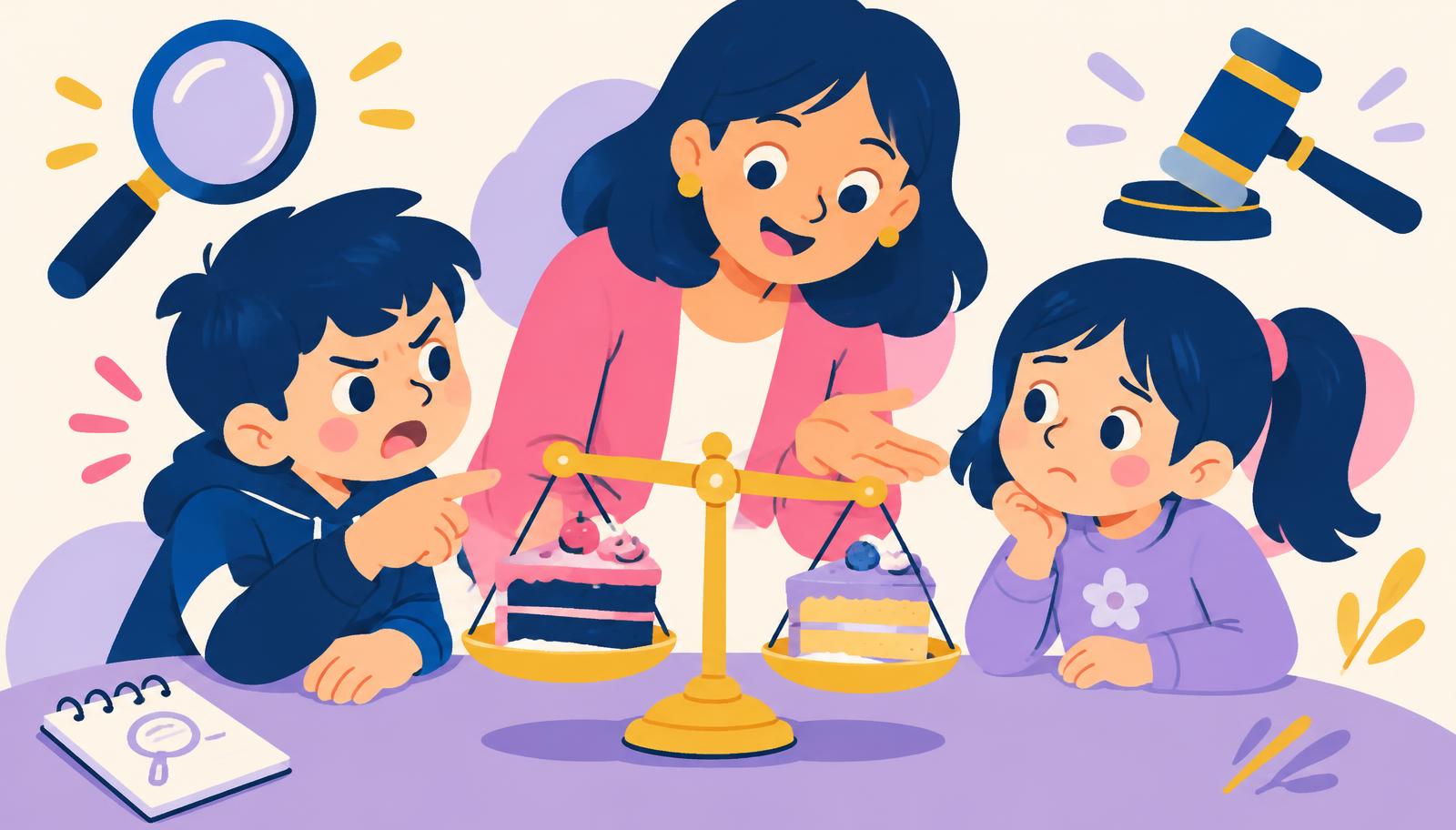
Sibling scorekeeping, rule-lawyering, and huge reactions to unfairness. The Justice language is a child with a strong moral compass.
Pass it on
 DeclassifiedFILE JUST-01
Key clue
The biggest blowups follow moments that feel uneven, inconsistent, or unexplained.
First move tonight
Explain the "why" behind a rule in one sentence before enforcing it.
If your child keeps score with siblings, argues every rule, or explodes when something seems unfair, their behavior is likely speaking the Justice language. Justice is one of the 5 Behavior Languages™, and it signals a child who needs things to make sense and feel fair.
These kids aren't being dramatic. They have a strong sense of right and wrong, and they haven't yet learned that fair doesn't always mean equal.
What does justice-driven behavior look like?
Common clues include counting who got more, "But you let HER do it," arguing about rule loopholes, taking blame very hard, and big reactions to being misunderstood or wrongly accused.
How do I handle "that's not fair" without arguing?
Validate the feeling first: "It really feels unfair to you." Feeling heard lowers the volume.
Explain the why, briefly. Justice kids cooperate more when the rule makes sense.
Teach "fair means everyone gets what they need" with real examples, like glasses or bedtimes by age.
Be consistent. Inconsistent rules are fuel for this language. Repair out loud when you get it wrong.
Turning justice into a strength
Kids who speak Justice often grow into advocates and leaders. Give them roles where fairness matters: helping make family rules, being the game referee, or standing up for others the right way.
Quick answers
- Why does my child always say it's not fair?
- Some children have a strong need for fairness and predictability. Explaining the reason behind rules and staying consistent usually reduces the arguments.
- How do I reduce sibling scorekeeping?
- Shift from equal to individual: give each child what they need, and spend one-on-one time so neither feels shortchanged.
Ask about this article
Got a question? Decode it here.
Get a quick plain-language explanation based on this article. Your question also goes to Cheyenne, the Director, who may answer it herself.
Pass it on
What language is your child's behavior speaking?
Take the free quiz →Parent HQ is coaching and education, not therapy, medical treatment, or emergency care.