Why Is My Child So Defiant? Decoding the Control Behavior Language
By Cheyenne Lofthouse-Wolf, LCSW
Power struggles, "you're not the boss of me," and arguing over everything usually aren't about disrespect. They're a child asking for a say.
Pass it on
 DeclassifiedFILE CTRL-01
Key clue
The pushback spikes when your child has the least choice: transitions, bedtime, getting out the door.
First move tonight
Give two acceptable choices before the hard moment, then calmly stick to them.
If your child argues with every request, refuses simple directions, or digs in harder the more you push, their behavior is likely speaking the Control language. Control is one of the 5 Behavior Languages™, the Parent HQ framework for decoding challenging child behavior.
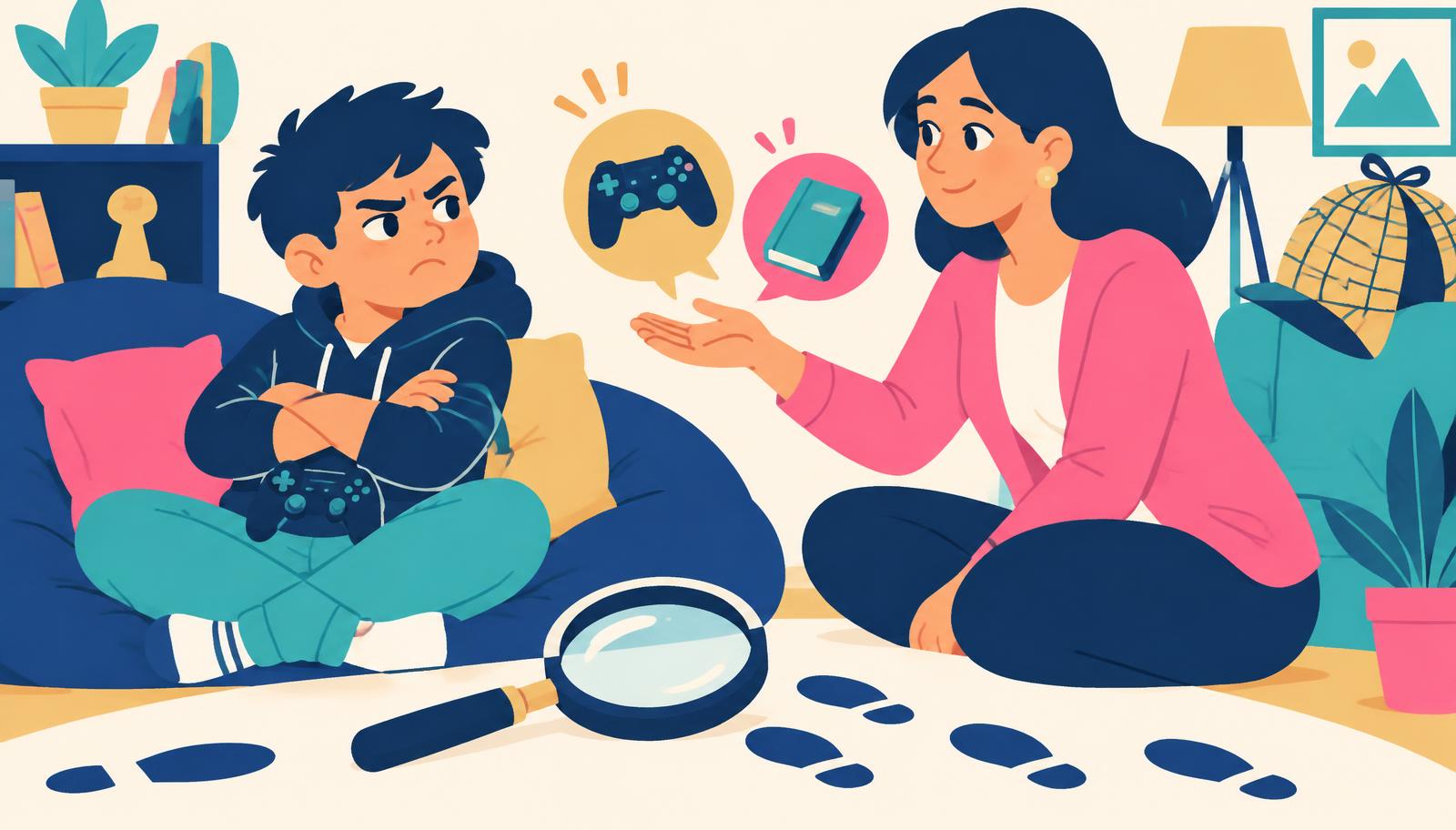
A child speaking Control isn't trying to run the house. They're trying to feel like they have some power over their own life. When a child feels powerless, they reach for the only levers they have: "no," stalling, bargaining, and loud refusals.
What does control-driven behavior look like?
Common clues include saying "no" before you finish the sentence, negotiating every limit, melting down when plans change, insisting on doing things their own way, and getting louder when you get louder. Many parents describe this child as strong-willed, stubborn, or defiant.
The pattern is the clue. Watch when it happens. Control behavior tends to cluster around moments when adults make all the decisions: turning off video games, homework time, leaving for school, chores, and bedtime.
Why do power struggles get worse when I push harder?
Because a power struggle needs two players. When you raise your voice or add consequences in the moment, the child's need for control goes up, not down. Now they're not just protecting their choice; they're protecting their dignity.
The goal isn't to win. It's to step out of the tug-of-war while still holding the limit.
How do I stop power struggles with my child?
Hand over small, real choices early: "Homework before or after dinner?" "Do you want to hand me the controller, or should I take it?" Choices give the need for control somewhere safe to land.
Give a heads-up before transitions: "Finish this match, then the console goes off." Surprises feel like losing control.
Use fewer words during the hard moment. State the limit once, warmly, and let the routine do the work: "Screens are done. You can turn it off or I can."
Find a daily "in charge" job: picking dinner side dishes, choosing the bedtime song, leading the walk home. Kids who feel capable somewhere argue less everywhere.
When to get more support
If power struggles are taking over your days and nothing seems to work, that's a signal to bring in backup. Parent HQ offers parent coaching, not therapy. If you're worried about your child's safety or mental health, contact your pediatrician or a licensed professional.
Quick answers
- Is a defiant child a bad kid?
- No. Defiance is usually a child's way of asking for some control over their life. In the 5 Behavior Languages™, it's read as a clue, not a character flaw.
- What is the fastest way to end a power struggle?
- Stop adding words and pressure. State the limit once, offer two acceptable choices, and follow through calmly.
- Are choices just letting my child win?
- No. You choose the options; your child chooses between them. The limit stays yours.
Ask about this article
Got a question? Decode it here.
Get a quick plain-language explanation based on this article. Your question also goes to Cheyenne, the Director, who may answer it herself.
Pass it on
What language is your child's behavior speaking?
Take the free quiz →Parent HQ is coaching and education, not therapy, medical treatment, or emergency care.