When Your Child Says "I Hate You": How to Respond to Hurtful Words and Swearing
By Cheyenne Lofthouse-Wolf, LCSW
Cruel insults, screaming, swearing at you. It stings. Here's what those words are really saying and how to respond without taking the bait.
Pass it on
 DeclassifiedFILE CASE-20
Key clue
The cruelest words usually come right when your child feels cornered, ashamed, or out of control.
First move tonight
Stay short and steady: "You're really angry. I'm not going anywhere." Talk about the words later.
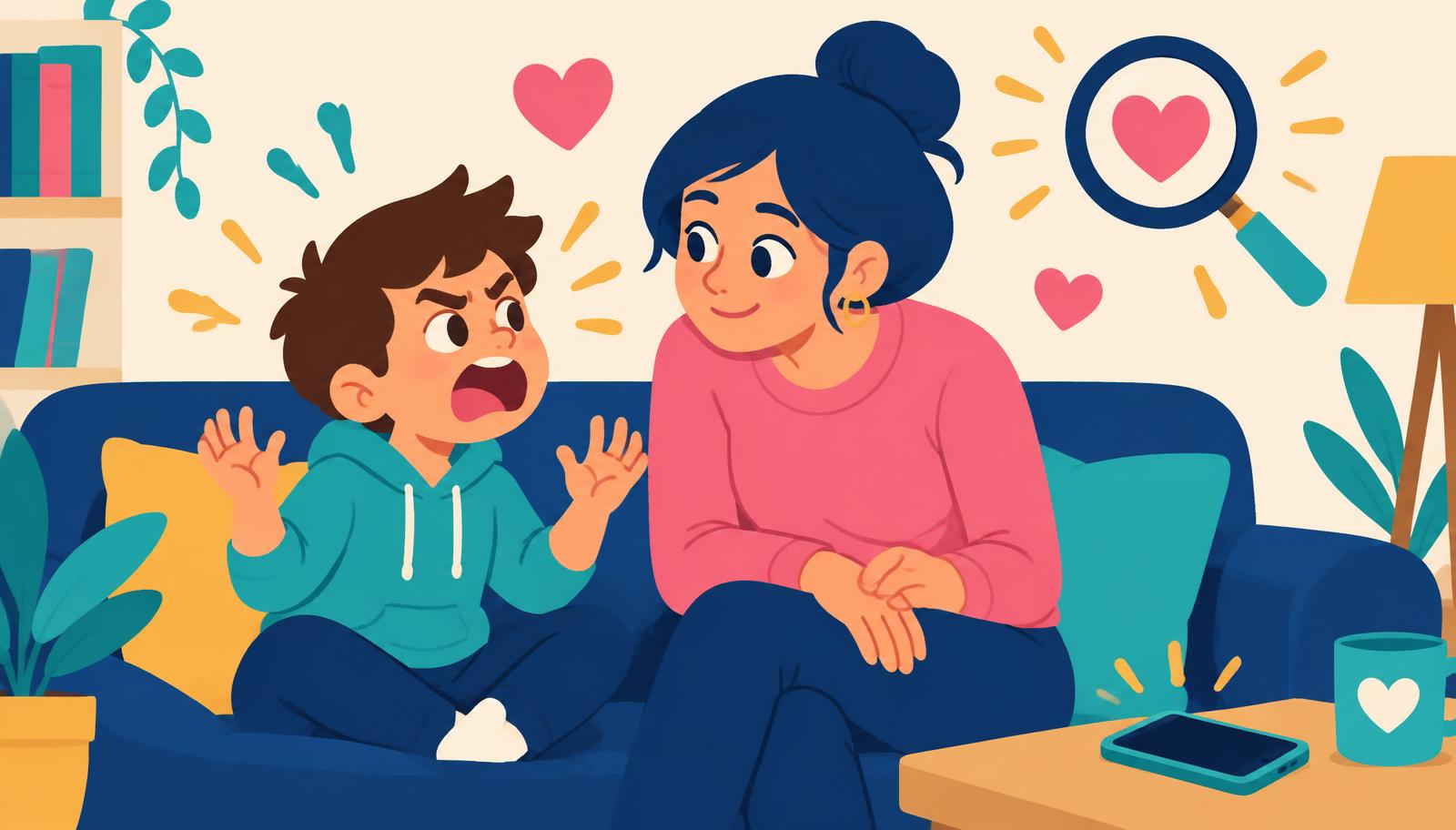
Hearing "I hate you" or worse from your child can hit hard, especially on a day when you've given everything. But in the heat of the moment, words are usually a weapon for pushing big feelings away, not a true statement about you.
In the 5 Behavior Languages™, verbal attacks often show up in the Connection language. The child is testing whether the relationship can survive their worst moment.
What should I say in the moment?
As little as possible. Long explanations, sarcasm, or matching their volume pour fuel on it. Try: "That's a lot of anger. I can handle it. We'll talk when you're calmer."
If the words turn into threats or you feel unsafe, step away and follow your safety plan.
How do I set limits on disrespect?
Once everyone is calm, hold the line clearly: "You can be mad at me. You can't call me names." Then teach what to say instead, like "I'm so mad I can't talk right now."
Notice and praise every time they use those words. Kids repeat what earns attention.
What if it happens every day?
Look under the words. Daily verbal aggression often points to stress somewhere else: school struggles, friendships, sleep, or anxiety. A calm one-on-one time each day, even 10 minutes, often lowers the volume more than any consequence.
Take care of yourself too. Hurtful words wear parents down, and you deserve support and backup.
When to get more support
Parent HQ offers parent coaching, not therapy or diagnosis. If you're worried about your child's safety, mental health, or development, talk with your pediatrician or a licensed professional. In an emergency, call 911; for a mental health crisis, call or text 988.
Quick answers
- Does my child really hate me?
- Almost never. "I hate you" usually means "I hate this feeling" or "I hate that I can't have what I want."
- Should I punish swearing?
- Respond calmly and set a clear limit, then focus on teaching better words for anger. Big reactions can turn swearing into a reliable button to push.
- When is verbal aggression a bigger concern?
- If it includes threats, comes with physical aggression, or is growing over time, reach out to your pediatrician or a licensed professional.
Ask about this article
Got a question? Decode it here.
Get a quick AI explanation grounded in this article. Cheyenne gets your question too and may reply herself.
Pass it on
What language is your child's behavior speaking?
Take the free quiz →Next move with Cheyenne
Stuck on this exact behavior?
Book a 60-minute Behavior Audit over Zoom. We investigate one big behavior together, and you leave knowing how to respond — with professional recommendations for home.
Book my Behavior AuditParent HQ is coaching and education, not therapy, medical treatment, or emergency care.